Introduction
May 17, 2026, marks the 58th World Telecommunication and Information Society Day. This year, the International Telecommunication Union has set the theme as “Digital Lifelines: Strengthening Resilience in a Connected World.” Digital infrastructure is a crucial lifeline for modern society, supporting urban operations, industrial upgrades, and public services. Artificial intelligence (AI) technology is becoming the core driving force in reshaping these digital lifelines and enhancing urban resilience and vitality.
Huizhou, located on the eastern coast of the Guangdong-Hong Kong-Macao Greater Bay Area, is seizing the opportunity to develop its AI industry. At the beginning of 2026, the Huizhou Municipal Committee and government proposed a long-term plan to “mobilize the entire city to build the AI and robotics industry” and established the Huizhou Bureau of AI and Robotics Development. This initiative aims to capture new industrial opportunities and create a new growth pole for high-quality development in Guangdong. On May 13, 2026, Huizhou held its first AI scene demand list release conference and smart city partner signing event, aimed at promoting the application of AI technology in key industries and accelerating the construction of an AI industrial ecosystem to support Huizhou’s economic and social intelligent transformation.

As a key player in building Digital China, China Telecom Huizhou (referred to as “Huizhou Telecom”) closely follows the strategic deployment of the municipal government. It deeply implements China Telecom’s core strategy of “Cloud Transformation, Data Transition, and Intelligent Benefits,” leveraging its comprehensive AI technology system. Huizhou Telecom is fully committed to building the Huizhou Intelligent Computing Center, deploying urban large models, co-creating trusted data spaces, and developing innovative AI scenarios, thereby injecting strong momentum into the application of AI across all sectors in Huizhou.
Building a Solid Foundation: Establishing a Comprehensive Digital Infrastructure
Strengthening Computing Power for Reliable Support
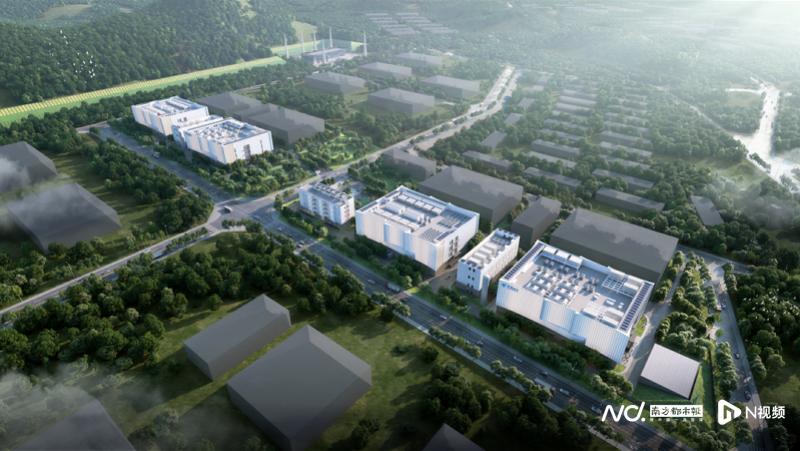
Computing power is the core foundation for the development of the AI industry. China Telecom continuously optimizes its supply structure to achieve heterogeneous computing power coverage, including general computing, intelligent computing, supercomputing, and quantum computing, providing solid support for large-scale model training and industry applications. The “Xirang” intelligent computing platform has been continuously upgraded to provide one-stop computing power scheduling and AI development services.
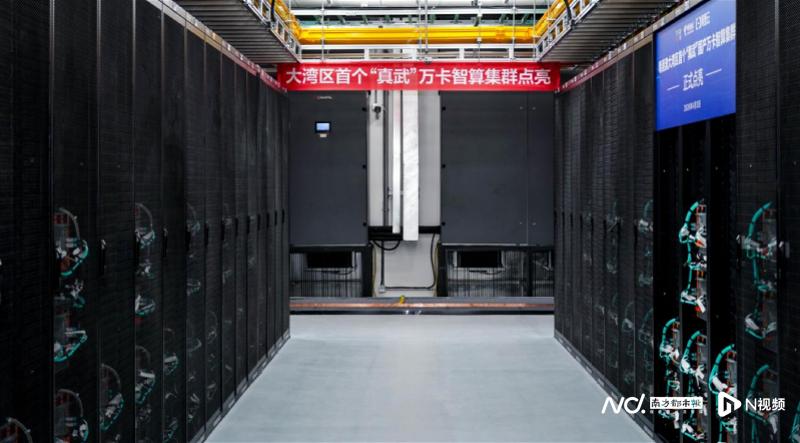
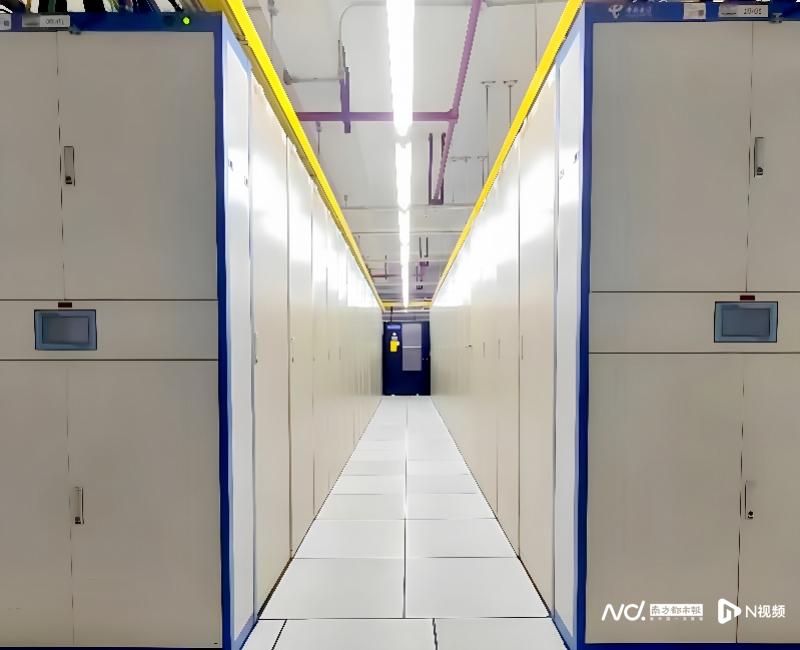
Focusing on local development, Huizhou Telecom has proactively laid out computing power infrastructure, steadily completing the construction of the Boluo Computing Center and the Jiangbei Computing Center. It is now fully promoting the construction of the Baihua Wanka Pool Computing Center, creating a computing power system with a service architecture of “One City, Three Pools.” The Huizhou Computing Center is fully integrated into the National Computing Hub of the Guangdong-Hong Kong-Macao Greater Bay Area, possessing four core capabilities: ultra-large computing power scale, ultra-low latency network, full-stack AI services, and green low-carbon operations. It employs full liquid cooling, domestic core chips, and a cloud-network integrated architecture, providing low-latency and high-reliability storage and computing services for governments, enterprises, and society. This infrastructure supports the training and inference of large models with hundreds of billions of parameters and the digital transformation of various industries, laying a solid foundation for the city’s intelligent transformation.
In addition to computing power layout, Huizhou Telecom actively explores new models and paths for the development and management of low-altitude drones. Leveraging the integrated platform established by China Telecom Guangdong, it aims to promote the pilot implementation of a low-altitude integrated network system in Huizhou, creating a comprehensive management platform that integrates “low-altitude network communication, real-time monitoring of aircraft, intelligent early warning, and precise countermeasures.” This system achieves “comprehensive perception, full-process control, and all-network interconnection,” providing a robust digital foundation for cultivating and expanding the low-altitude economy. By quickly deploying 5G-A capabilities through existing communication sites, it solidifies the low-altitude digital infrastructure.
Activating AI Applications through Data Models
Data is the source of AI empowerment, while models are the core engine for intelligent upgrades. China Telecom has built the “Xinghai” data intelligence platform, establishing a governance and trusted circulation toolchain for high-quality datasets. This promotes deep integration of proprietary, open-source, and third-party datasets, providing efficient data empowerment for model training and application innovation.
Relying on the group’s mature data platform technology, Huizhou Telecom is deeply engaged in the digitalization of government affairs, operating the Huizhou “Hui Min Su Ban” government service platform. This platform, built on China Telecom’s robust cloud-network integrated computing foundation, achieves a system availability of 99.99%. Additionally, leveraging the Huizhou Government AI Pilot Base, it bridges the gap from AI technology research and development to large-scale application, significantly enhancing the efficiency of government service responses and the accuracy of handling requests. For instance, in addressing visitor consumption disputes in the coastal resort area, the platform utilizes AI to automatically identify request types, match responsible units, and intelligently assign tasks, reducing the time for task reassignment from two days to 30 minutes, thereby improving visitor satisfaction and enhancing Huizhou’s cultural tourism service brand image.
Establishing a Security Barrier: Comprehensive AI Security Protection
Security is the prerequisite for the healthy and sustainable development of the AI industry. China Telecom is accelerating the construction of a national integrated quantum security infrastructure, establishing the world’s largest quantum metropolitan area network, which covers multiple cities. It has released the world’s first distributed cryptographic system that integrates QKD and PQC. The “Qianmo Data Gathering” security corpus is continuously iterated with the “Xingchen·Jianwei” security large model, enhancing the security assurance capabilities for critical infrastructure. Addressing the unique security risks of AI, it has launched the first domestic open-source AI security barrier, focusing on input-side attack prevention, achieving industry-leading protection capabilities, and constructing a comprehensive dynamic protection system covering cloud networks, data, models, and applications.
In response to local AI scene implementation needs, Huizhou Telecom has optimized its security deployment plans, providing differentiated network services for various experimental scenarios through network slicing and edge computing solutions, ensuring the security and stability of data transmission, and building a robust firewall for the stable development of the AI industry.
Empowering Industries: Enhancing Quality and Efficiency Across Sectors
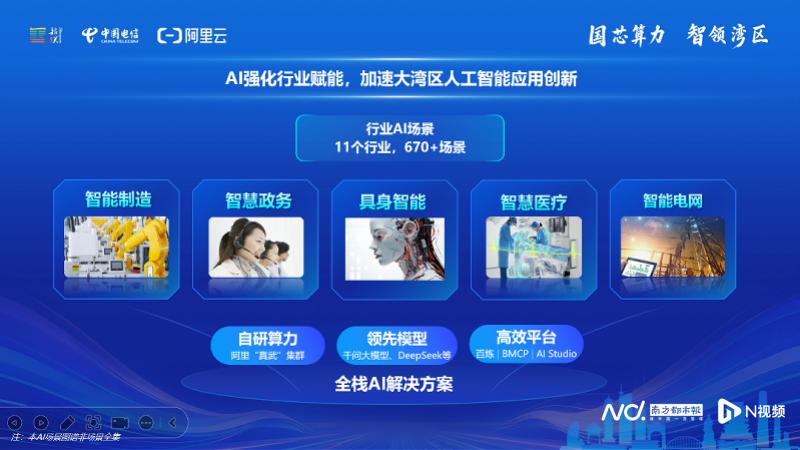
Empowering Manufacturing: Driving Quality and Efficiency in Industrial Production
Focusing on the deep-seated demands for digital transformation in the manufacturing industry, Huizhou Telecom actively promotes the pilot city work for the digital transformation of small and medium-sized enterprises (SMEs). It provides integrated solutions covering R&D design, production optimization, intelligent transformation, and data mining for key industries such as 5G and smart terminals, ultra-high-definition display, intelligent connected vehicles, and new energy storage, leveraging its own cloud-network digital security and industrial internet platform capabilities.
In a case study within the electronics manufacturing industry, a local electronics technology company faced challenges such as inaccurate procurement plans, inventory backlog, and low levels of warehouse informatization. By implementing an ERP system to connect procurement, production, warehousing, and finance, it achieved multi-system collaborative optimization. After the transformation, the inventory turnover rate improved, the inventory level decreased, procurement plan accuracy exceeded 90%, and product cost deviations were controlled within 10%, significantly enhancing the company’s market competitiveness.
Empowering the Petrochemical Industry: Strengthening Safety in Chemical Parks
As a world-class petrochemical industrial base in the Guangdong-Hong Kong-Macao Greater Bay Area, Huizhou Daya Bay has a high concentration of petrochemical industries and stringent safety control requirements. Huizhou Telecom continues to deepen the digital upgrade of the petrochemical industry, upgrading basic communication services to a comprehensive solution of “5G Private Network + Industrial Internet + Smart Park,” focusing on key areas such as park security and production control, establishing benchmark applications for intelligentization in the petrochemical sector.
In the smart upgrade of the park, Huizhou Telecom collaborates with key enterprises in Daya Bay to build a 5G + smart digital exhibition hall, leveraging MR digital sand table and AI digital human technology to enhance the park’s investment promotion capabilities. It undertakes projects for the intelligent transformation of weak current systems and network optimization in the park, integrating intelligent modules such as video surveillance, gas detection, and perimeter security to achieve facility visualization and intelligent risk monitoring. In construction scenarios, it builds a 5G private network, creating an all-weather intelligent defense line that transitions from “passive response” to “active early warning” in petrochemical construction sites. Utilizing the high bandwidth and low latency characteristics of the 5G network, the system achieves millisecond-level backhaul of high-definition video from construction sites and real-time interaction of massive IoT data. Combined with AI visual analysis algorithms, it accurately identifies risks such as personnel not wearing safety helmets, entering dangerous areas, and violations of high-altitude operations, triggering sound and light alarms and backend management in real-time.
Additionally, Huizhou Telecom establishes dedicated 5G private networks for local technology chemical enterprises, replacing traditional wired networks with 5G to quickly connect heavy equipment such as kilns and crushers, solving the wiring challenges in old factories and enabling real-time collection of production parameters (temperature, pressure), thus enhancing the efficiency of production process control and supporting the green, low-carbon, and safe development of the petrochemical industry.
Empowering Public Services: Creating a Warm and Smart Ecosystem
Huizhou Telecom consistently fulfills its social responsibilities as a central enterprise, focusing on the pain points and challenges of public services. It leverages AI technology to continuously optimize public service scenarios in government affairs, healthcare, education, and rural areas, ensuring that the benefits of digital intelligence are accessible to all.
In the realm of government services, it continuously enhances the operational capabilities of the “Hui Min Su Ban” platform through AI technology, significantly improving the efficiency of government service responses and the accuracy of handling requests. In grassroots healthcare, it has achieved full coverage of the “Village Doctor Communication” project, addressing the informatization gap in rural healthcare and bridging the “last mile” of grassroots medical services. In education, it accelerates the digital upgrade of campus security, steadily expanding the campus safety platform’s business. In rural revitalization, Huizhou Telecom continues to carry out the “Three Lines” rectification of rural lines, standardizing overhead lines and addressing chaotic wiring issues to optimize the rural living environment. It actively participates in upgrading smart township systems using video AI, empowering grassroots governance and enhancing public safety capabilities, thus reinforcing the security of rural areas. It also relies on high-quality cloud-network resources to build a remote party-building platform, facilitating online learning, centralized discussions, and regular party management for grassroots party organizations, enhancing the quality and efficiency of grassroots party building. Furthermore, it improves rural communication network coverage and optimizes smart cultural tourism services, fully empowering rural governance, industrial development, and public welfare improvement.
Empowering SMEs: Facilitating Digital Transformation
Huizhou Telecom focuses on the development direction of “Cloud Adoption, Data Utilization, and Intelligence Empowerment,” providing SMEs with full-cycle services including diagnostic planning, deployment, and operational support based on Tianyi Cloud computing resources and security foundations, achieving cost reduction, quality improvement, and efficiency enhancement in digital upgrades.
A local traditional manufacturing enterprise faced challenges such as rough warehouse management, delayed quality inspections, and lack of product traceability before transformation. Huizhou Telecom, leveraging the “Yiqi Service” empowerment system, enabled the lightweight deployment of cloud hosts for the enterprise, connecting production, warehousing, and quality inspection data links. Through real-time quality inspection data analysis, dynamic production scheduling, and production dashboards, it achieved intelligent decision-making. After the transformation, the enterprise’s inventory turnover rate increased by 25%, material traceability accuracy reached 100%, and the response time for quality defects was significantly shortened, successfully achieving cost reduction, quality improvement, and efficiency enhancement in its digital upgrade.
Focused Development: Dual-Engine Technology Ecosystem to Accelerate AI Industry Scale
Iterating Communication Technology: Building a 5G-A + AI Integration Development Engine
Huizhou Telecom continues to increase investment in new communication infrastructure, using AI technology as a key empowerment tool to accelerate 5G-A network construction, deepen technological innovation, and foster ecological collaboration. This promotes the deep integration of 5G-A and AI, continuously solidifying the foundation for digital development, making “5G-A + AI” the core engine driving digital transformation.
Committing to Independent Research and Development: Strengthening Local AI Technical Capabilities
Independent research and development is the fundamental guarantee of core competitiveness. Huizhou Telecom aligns with the group’s technology research and development pace, continually increasing investment in AI field R&D, focusing on core areas such as large models and intelligent computing platforms, and enhancing AI technical capabilities to provide solid technical support for local AI scene iterations and industrial innovation.
Tackling Cutting-Edge Technologies: Creating a Benchmark for Multi-Application Innovations in 10G Optical Networks
Huizhou Telecom actively responds to and implements higher-level strategic deployments for the development of 10G optical networks, fully launching pilot projects. These pilots focus on four core scenarios: residential communities, factories, parks, and commercial buildings, precisely matching customer application needs, selecting local residential and advantageous industrial resources, and striving to create regionally distinctive demonstration samples. It actively explores and verifies ultra-high-speed all-optical home networking using “10G FTTR + WiFi7,” industrial intelligent upgrades through “10G Industrial PON,” and new application models such as “in-computing,” aiming to build robust 10G optical network capabilities through the integration of cutting-edge technologies and ecological construction, supporting the construction of low-latency, high-bandwidth, and secure 10G network capabilities for smart city development, and establishing Huizhou as one of the first 10G cities in the country.
Deepening Ecological Co-Building: Creating a New Pattern of Smart City Cooperation
The development of the AI industry relies on collaborative co-construction within the industrial chain. Huizhou Telecom adheres to the development philosophy of open sharing and ecological win-win, empowering partners to efficiently carry out application innovation and continuously deepening cooperation and cross-industry collaboration.
Looking Ahead: Anchoring the Digital and Intelligent Direction to Empower Smart City Construction
At the 2026 Huizhou first AI scene demand list release conference and smart city partner signing event, the Huizhou Municipal Government and China Telecom Guangdong signed the “Strategic Cooperation Framework Agreement for Smart City Partners in Huizhou.” Both parties will establish a cooperation mechanism driven by scenes, applications, and ecological collaboration, conducting in-depth cooperation in technology R&D, product applications, talent cultivation, and industrial incubation to jointly promote smart city construction.
Currently, the AI industry has entered a critical stage of large-scale implementation and high-quality development. Huizhou Telecom will take this strategic cooperation signing with smart city partners as a new starting point, continuously implementing the municipal committee and government’s industrial development deployment, increasing investment in digital infrastructure, iterating and upgrading AI innovation application scenarios, and becoming a builder of digital cities, an enabler of industrial upgrades, and a guarantor of public services, making services warmer and governance smarter.
In the future, Huizhou Telecom will focus on core areas such as AI industry cultivation, computing power infrastructure construction, and intelligent public services, deepening collaboration to jointly create benchmarks for smart city and AI industry development, promoting high-quality development of the AI industry in Huizhou, and providing solid digital and intelligent support for Huizhou to become a new growth pole for high-quality development in Guangdong.
Comments
Discussion is powered by Giscus (GitHub Discussions). Add
repo,repoID,category, andcategoryIDunder[params.comments.giscus]inhugo.tomlusing the values from the Giscus setup tool.